Become a MacRumors Supporter for $50/year with no ads, ability to filter front page stories, and private forums.


Apple developed two Mac Pro models in recent years that never made it to market, according to Bloomberg's Mark Gurman.

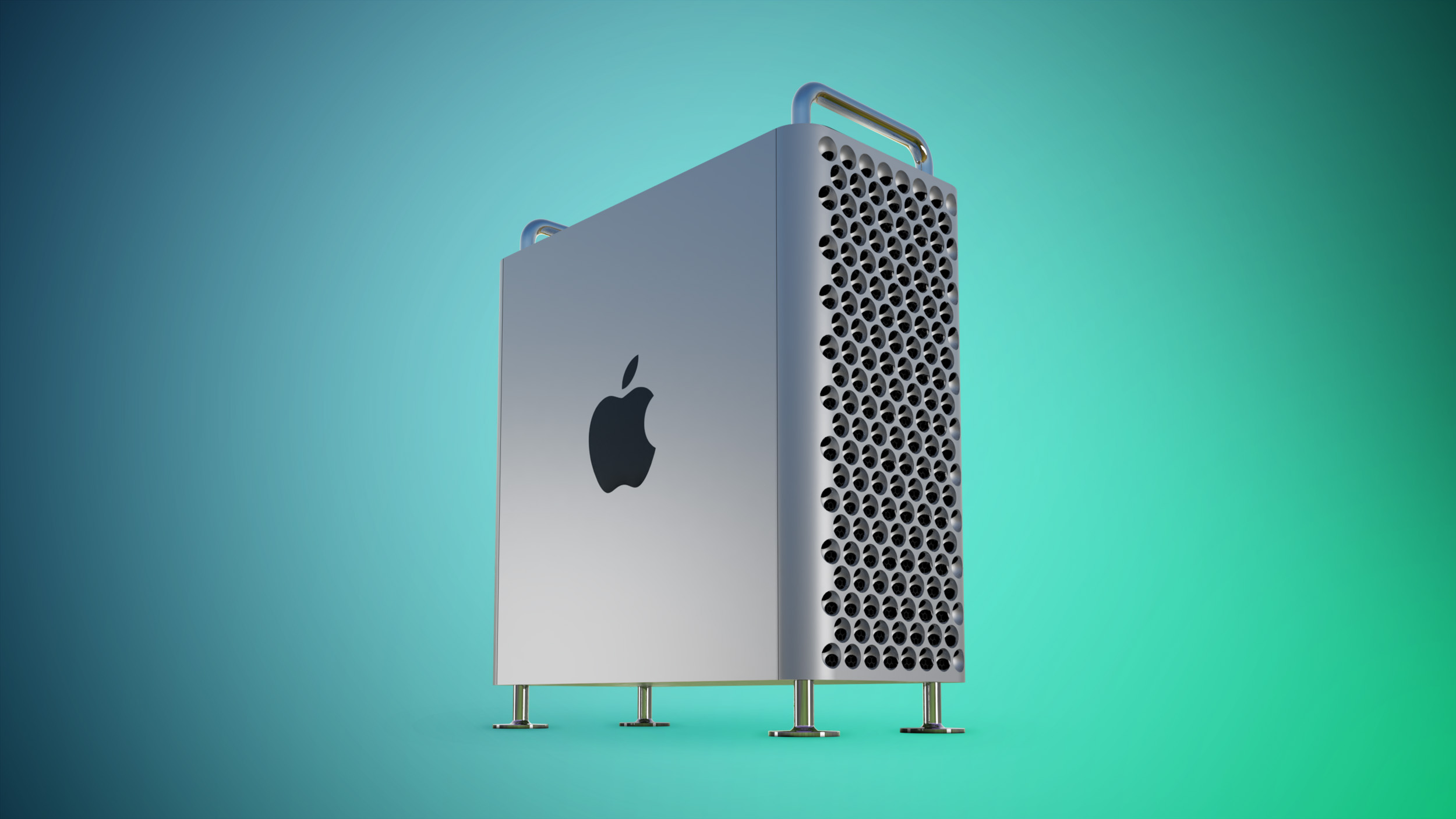
Mac-Pro-Feature-Teal.jpg

In his latest "Power On" newsletter, Gurman revealed that Apple internally developed two unreleased Mac Pro projects codenamed J170 and J190 before ultimately discontinuing the machine altogether.


J170 was apparently a new Intel-based Mac Pro, which is notable because Apple had already completed its transition to Apple silicon by the time the project was in active development. Gurman did not specify what "certain uses" the Intel model was meant to address, but its existence suggests Apple explored keeping an x86 option alive for specific professional workflows even years into the Apple silicon era.

J190, meanwhile, was said to be an M3 Ultra-equipped Mac Pro that was supposed to launch alongside the M3 Ultra Mac Studio in early 2025, but Apple shelved it before release. It would have paired the same chip found in that Mac Studio with the Mac Pro's unique-to-the-lineup PCIe expansion slots.

Neither model shipped, and Apple discontinued the Mac Pro entirely this year, ending its 20-year run. The Mac Pro had been left on the aging M2 Ultra chip from 2023 while the Mac Studio continued to receive refreshes, and it was priced roughly double that of a similarly configured Mac Studio despite offering essentially the same performance.

The J170 and J190 cancellations add to a growing list of shelved Mac Pro plans. Apple had also developed "Extreme" chip variants, processors with twice the CPU and GPU cores of Apple's Ultra chips, for a future Mac Pro before winding down those projects over cost and demand concerns.

Gurman said he does not expect Apple to bring back the Mac Pro "anytime soon — if ever." Apple is instead expected to refresh the Mac Studio with M5 Ultra chips as early as this fall.

Article Link: Apple Shelved Two Mac Pro Models, Including an Intel-Based One
Just because Apple designs alternative products doesn’t mean they were “supposed to” launch in any timeframe or ever.
 
MacBook Neo ROI has put extra nails in the coffin. I'm all for a powerful Mac like the Pro, but the sales obviously don't make it something of interest for them anymore.
You cannot expect sales when you are, at the same time, purposely holding the product line in an obsolete state. For instance, at my work, we were holding off on purchasing a large number of Mac Pro machines (and XDR Displays) until they were reasonably updated. Instead, Apple killed both products. Moreover, they killed the products in such a way that since the day of announcing the "killing," we could not even order the non-updated mahcnines/displays -- we would buy even the old models if it was possible. Congrats Apple, this is not how to operate towards enterprise customers. With Apple's approach, they simply engineered the commercial failure.
 
You cannot expect sales when you are, at the same time, purposely holding the product line in an obsolete state. For instance, at my work, we were holding off on purchasing a large number of Mac Pro machines (and XDR Displays) until they were reasonably updated. Instead, Apple killed both products. Moreover, they killed the products in such a way that since the day of announcing the "killing," we could not even order the non-updated mahcnines/displays -- we would buy even the old models if it was possible. Congrats Apple, this is not how to operate towards enterprise customers. With Apple's approach, they simply engineered the commercial failure.
I can appreciate that thought process, however, it isn't a unique thought process to us outside of Apple? I mean Apple have enough brains to know that a stagnating enterprise and professionals line isn't a popular one and the scales must've tipped eventually to make it not worth while to update because the return just isn't what they want at this stage of the corporation. Sad as that is, we just are not enough of a base and it has to come down to sales.

Think about it this way, you produce a pro line of products for nearly 30 years. You have been through technical revolutions during this time, you understand when your products stagnate it leads to poorer sales. You also know that when you refresh your professional line what the typical ROI is. At what point do you call it a day? This is what hurts to admit, they must have the data - they are not in the habit of leaving money on the table if a strategy works.
 
  • Like
Reactions: AdamBuker
Internal struggle within Apple seems like a plausible read of the situation. I’d guess Ternus was on the side of continuing the Mac Pro, the keynote presenter at the 2019 Mac Pro’s unveiling. Competing internal priorities explains the conundrum that vexed me in 2022 before we knew if the Mac Pro would ever get updated again: why would Apple have put SO much engineering effort into designing the 2019 Mac Pro as a kickass tower workstation (including the custom MPX slots cooling solution), if they knew Apple Silicon was right around the corner and were going to abandon the new Pro “shredder” design after only 1-2 generations? Why not follow up the 2013 trash can Mac Pro with the same slot-less concept of a “2019 Mac Studio” instead?

The 2019 Mac Pro was a transition and public beta testing platform for new technologies. I don't think Apple intended it to just go two generation but they positioned it so if it did , then it really wouldn't matter as much.

A couple of things to the '?' above , but not necessarily in order.

The MP 2013 did have a follow-up. That it was the iMac Pro. MP 2013 --> iMac Pro --> Mac Studio is basically the succession order. Mac Pro 2019 really wasn't part of that path. Apple did the iMac Pro first and then started on the Mac Pro . The Mac Pro was designed about the constraints of both the Intel CPU and AMD GPU trends of increasing power consumption, but also as something that could contain a replacement that tossed both of those (that took up a much larger 2D space on the board (and pulled the RAM back off the other side of the board. ) .

The MP 2019 beta's some technology:

a. Afterbuner. Basically destine long term to be inside of the Apple SoC (across the spectrum), but useful early on to have as a FPGA so could fix bugs before trapped inside of a fixed silicion design. So deepening inroads in the a/v processing submarket.

A generation or two after mature Apple video processing would end up in all the silicon in the line up... it wasn't long term viable unique point for the Mac Pro.. [ Some folks drank kool-aid thinking Afterburner was going to get new feature to give parity to the next gen apple silicon... that was never was going to happen. ]

b. Experimentation with two tightly coupled GPUs ( via Infinity Fabric). UltraFusion was likely planned to make the GPU set up so there were no large NUMA effects to actively code around, but if folks readily adapted to the twin AMD GPUs than two Ultras more loosely coupled would have a path in the graphics API.

c. The T2 chip. The 'T' pretty much stood for 'transition'.
i. transitioning to an Apple SSD at the core.
ii. transitioning to a more locked down firmware. (and away from UEFI).
iii. ano9ther subset of media encoding that Afterburner did.

d. thunderbolt provision fundamentally integrated into the baseline design. (MPX cards came with more Thunderbolt)


Secondly, it was also a target market shift. The base price of the MP 2013 was about $3k. The base price of the MP 2019 was $6K. That is an 100% increase. Apple was not aiming at the same market. They also very likely were trying to reset the price anchor point for the Mac Pro. The Apple Silicon Mac Pro was not going to be anywhere near $3K. So yes they did 'know' about Apple Silicon when specifying the Mac Pro 2019.

Setting the lower bound of the Mac Pro at $6K gave the iMac Pro's $4k-6K range to its replacement ... the Mac Studio. Very similar to how the Power Mac $2.5-3K range was handed to the large screen iMac over time after the Intel transition.


Thirdly, at the MP 2019 intro , when intially talking about PCI-e add in cards Apple mainly talked about non-GPU cards. ( drives. Audio , Video )

[ about 1:21 -1:22 on timeline
] ... all the PCI-e cards that a MP 2023 would be able to use ( and use longer t erm if the drivers all staid updated and maintained on the new driverKit APIs. ).
When does talk about graphics cards it is all about Apple's completely new approach to GPUs.
the big splash app demo at end of Mac Pro segment is all "orchestra in a single box" demo. Not show off the lastest app running on an consumer Nvidia GPU. "Orchestra in a box"... MP 2023 can still do that (again one of the demo configurations. ).

Apple Silicon Mac Pro’s inability to buy base model now, upgrade most components later, is a death blow to the prosumer market that represents most people posting here on MR Forums, myself included. $6000 for a computer is a very big stretch for most enthusiasts like us,

the base for the MP 2019 was

"... Priced starting at $5,999, the Mac Pro is equipped with ..."

with a relatively small SSD and an mature 580X GPU whose architecture had been deployed in previous Macs. Bump the RAM and SSD up something more baseline and it was over $6K.

The Apple Silicon was closer to $7K, but if gave a MP 2019 a W5700X , matched RAM, and matched SSD. Not really more expensive. And that was probably not an accident relative to the 2019 pricing structure.

When Apple increased the base price of Mac Pro by 100% in 2019 , they were already not really going after the "enthusiast" market. This isn't 'new'. A number of folks took that April 2017 "Mac Pro apology" meeting to mean that they were out to cater to enthusiasts, but if take the rose colored glasses off , that notion isn't really there at all.

M3 Ultra Mac Studio with faster Thunderbolt 5 PCIe expansion capabilities eliminates the last remaining justification for a Mac Pro with internal PCIe slots, once GPU expansion is off the table. TB5 allows for 100 gigabit networking and basically anything else people might need a PCIe slot for.

TB5 is pragmatically limited to 80Gbs for any symmetrical data flow. They can cover 40GbE cards, not 100GbE ones. (a dual 40GbE card would work also). In that April 2017 meeting Apple said that overly relying on Thunderbolt for everything was a mistake. It is somewhat less of a mistake in 2026 as it was then, but probably still a mistake with ramifications. So far Apple has managed to replace the folks walking away Mac ecosystem with more folks coming in (who don't mind the limitations. ) , but for Mac Pro it has been a bit of a death sprial. Smaller group so higher low volume 'tax'. ... leads to smaller group and higher 'low volume'. tax. rinse and repeat.


Anyway, thanks Gurman for confirming that those of us holding out for more Mac Pro updates weren’t entirely deluded, they really did exist within Apple. (Except for the people wishing for a dream Mac Pro built with stackable “compute module” blades, yall were always dreaming!)

Another Intel one was pretty close to deluded. Intel's execution was horrible. It is one of the reasons Apple left. An even worse workstation CPU in most practical senses wasn't likely going to be an Apple choice. If Apple had completely fumbled the Ultra then maybe it would have been a choice between two bad choices.

If the M3 Ultra in the Studio was languishing with extra unsold SoC then the Mac Pro probably will still be around.
Where Apple missed the boat with Mac Pro with Apple Silicon is in my opinion for more in software than it is whether there is a M2 or M3 Ultra ( or some Rube Goldberg extreme) in there. Somewhat similar to how Apple somewhat bet heavily on OpenCL to make MP 2013 attractive and then at the same time pivoted away toe Metal. (and yes there was lots of maneuvering by 3rd parties trying to squash OpenCL and politics wrapped up in that. but not too similar to Apple's mostly internal gazing at AI that has happened over last 3-4 years also. )
 
  • Like
Reactions: CWallace
You cannot expect sales when you are, at the same time, purposely holding the product line in an obsolete state. For instance, at my work, we were holding off on purchasing a large number of Mac Pro machines (and XDR Displays) until they were reasonably updated. Instead, Apple killed both products. Moreover, they killed the products in such a way that since the day of announcing the "killing," we could not even order the non-updated mahcnines/displays -- we would buy even the old models if it was possible.

That is a bit driven by the RAM-apocalypse . When the XServe and Mac Pro 2012, Mac Pro 2013 phased out there was a window Apple signaled and end date for buying in advance. Here I doubt there was really any inventory. If PCC has be rolling out on M2 Ultras and supply is constrained.. their aren't any extras. And the shortages on the M3 Ultras shows there aren't even enough of those for the Mac Studio; let alone two Mac products drawing on the same supply.
( Apple's RDMA over Thunderbolt push in Q4-25 and Q1-26 probably was to keep product they though might not be moving fast going. But just drained the supply even faster. Not they are crying about having higher average unit sales prices. )

Normally, Apple does do an 'off ramp'. It just isn't normal days. That should have been part of the calculation when playing a game of 'chicken' with Apple. Supressing the demand signal for a product that you actually want can backfire if play that game too long.


Congrats Apple, this is not how to operate towards enterprise customers. With Apple's approach, they simply engineered the commercial failure.

Enterprise customers buying Studios for AI agent nodes and AI compute nodes are not making this a commercial failure for Apple at all. There are lots of folks with more money to allocate who are buying up systems.

P.S. it has been more than decade since Apple really wanted to sell more than one monitor at the same time. Since before the Thunderbolt display Apple has largely handed the Display market to 3rd parties. Apple does one docking display unit and that is it. It is largely a commodity business that they do not have a deep interest in.

the Studio and Studio XDR display are largely the same chassis with a different screen. There is lots of parts overlap there so it is more like 1.5 display products rather than 2.

If really needed an XDR display it would would worked with new or current macs. If actually actually required those for urgent business needs and squatted on purchase, that is mostly self-inflicted. If requirements need something and have budget for it, buy it. if the XDR didn't fit requirements, buy something else.
 
Last edited:
Nvidia SOC will boot windows, the problem is UEFI, macs doesn't use UEFI, BootCamp was their way to "fake" UEFI, so until apple and microsoft work together (I doubt they will) macs will only boot MacOS (limited to some linux variants).

This is some revisionist history.

BootCamp was more about booting via legacy BIOS than EFI/UEFI. Apple wanted to do EFI boot from the start. The PowerPC Macs were "Open Firmware". Intel was trying to get x86 market to adopt EFI (early 2000's) as a replacement for legacy BIOS. UEFI added ( 2005 ) some feature but one of the major bargaining tools for adoption was adding extensive BIOS compatibility mode. Apple started moving toward Intel before UEFI was done so made tons of sense to selection EFI.

"...
In 2017, Intel announced its intention to migrate all machines to class 3 by 2020, i.e. to stop supporting legacy BIOS. Although I don't know if they've actually achieved that goal, I suspect that eventually most or all machines will be class 3 machines only. ..."

Apple was one of the first major players to be EFI only across the whole line up when switched to Intel in 2006. The vast majority of the rest of the x86 PC market was deeply dragging their feet with focus on BIOS mode . So much so that in 2017, over 10 years later after introduction of UEFI, still trying to get folks to drop BIOS as the default.

apple doesn't do legacy standards forever. Floppy disks .. dead. standard CD-ROMs dead. serial ports. dead. USB-A ports... dead. 32-bit apps ... dead etc. etc. Apple has about zero interest in closely following an industry that is still 10 years later still trying to get off BIOS.


That kind of commitment to 1980s standards and various security holes in UEFI put Apple off on using UEFI. they had to use it because Intel needed it; not because Apple wanted it. One of the major missions of the T2 chip was to plug up the security holes in EFI/UEFI boot.

When the mainstream of the PC market finally got to major adoption of EFI/UEFI thats when things got more interoperable with some 2017-2019 macs. (e.g., more GPU cards natively supported x86 context and EFI boot mechanisms. )

Apple had a secure boot systems for iPhones. They didn't need to re-invent the wheel to get macOS to boot securely. It was already working with iOS.

Windows "Secure Boot" (leveraged on top of UEFI) still has regular security problems.


In modern context, Bootcamp does present more of a UEFI image. With T2 systems it is a secured UEFI. And on virtualized Apple Silicon instances can get a hooks to bootstrap a virual UEFI. However, that isn't a 'raw' hardware boot from power off context. that could be inaccurately labeled a 'fake UEFI' but. virtual UEFI is far more accurate.


The Nvidia SoC boots UEFI largely because driven by Windows (and somewhat Linux) constraints. Apple doesn't wake up every day and jump out of bed to maximize sales of Windows licenses. That isn't the job. 'Bootcamp' was mainly a 3rd level side effect of Macs temporarily joining the x86 ecosystem. That is dual edge. Pick up the x86 volume but also pick up the x86 legacy baggage. Apple just made lemonade out of lemons with BIOS booting.
They didn't want to... it just kind of falls out of the other stuff Intel required them to do.

Dump Intel and dump that requirement.

The Apple silicon group only makes silicon for Apple products. And Apple products only pick Apple Silicon for main SoC. That isn't the Windows market basic structure at all.
 
Last edited:
  • Like
Reactions: enb141 and CWallace
And now dgx station is available from nvidia partners. 72 cpu cores, lots of unified mem. Perfect for local ai. People pay anything to get hold of those.
M5 extreme mac pro could have been more or less that. 4x18 cpu cores and 4x40 gpu cores. Above 1200 tb bandwidth (2000?) etc etc

Because the development of the DGX station's SoC is almost entirely subsidized by selling severs (which cost even more). With just the DGX station SoC you can't display to a local ai user. You have to stick in a Nvidia GPU workstation card (or consumer one?) to actually get any display to a local monitor.

What is being asked for is an extreme part for a single super duper low volume product. The DGX staton's SoC ship in vastly far higher aggregate numbers than the number of DGX stations. Additionally, the DGX station run rates starts after the sever placement sales start to cool off a bit. It is a product to sell 'excess' SoC into over a longer period of time from the start of the server sales.

Hand waving at a potential Apple AI server chip likely has same issues as DGX stations SoC has. An specifically made AI server chip likely can't do display out either. It is a substantive waste of die space in the server context. However, Apple doesn't do dGPUs so can't put on that band-aid. ( Nevermind, that the Apple AI server chip scale probably can barely afford to pay for itself let alone subsize another product.)

Why is Apple content to not be on the forefront of the current computing trends and instead just cater to the consumer and prosumer of what was hot 5 years ago (movie clip production for the attention economy)

Pretty good chance the DGX Spark will outsell the DGX station in terms of overall unit numbers sold. In part because can plug Spark or Apple's solutions into a regular USA standard outlet. (DGX station not as much 1600W. )


Apple does compete directly with the DGX Spark (and the other 'clones' from other system vendors). And does well. So why wouldn't they go for the higher unit volume option? And the Spark's SoC is about the weakest thing in Nvidia's line up. Why Apple 'attack' where Nvidia is weakest? Instead they should try to attack where the Nvidia hype bubble is the strongest. That is a 'strategy' ?

If it is argument that Apple should try to make almost everything for everybody, they really haven't tried to do that since Jobs came bag. In fact, that is pretty much institutionalized ingrained on the "no fly list' since he came back.


Recent posting about upcoming AMD Zen6 bragging about best single threaded score.

but with caveat that carves out any direct M-series comparison. Apple is really 'loosing' at computing trends... cough not really.

Finally, when Apple increased the base Mac Pro price 100% from $3K to $6K that did not result in record unit number sales for the Mac Pro. Going up another $5-8K in price is not going to be a barn burner increase in unit sales.. Even in mindless "spend money as fast as you can" AI bubble.
 
This is some revisionist history.

BootCamp was more about booting via legacy BIOS than EFI/UEFI. Apple wanted to do EFI boot from the start. The PowerPC Macs were "Open Firmware". Intel was trying to get x86 market to adopt EFI (early 2000's) as a replacement for legacy BIOS. UEFI added ( 2005 ) some feature but one of the major bargaining tools for adoption was adding extensive BIOS compatibility mode. Apple started moving toward Intel before UEFI was done so made tons of sense to selection EFI.

"...
In 2017, Intel announced its intention to migrate all machines to class 3 by 2020, i.e. to stop supporting legacy BIOS. Although I don't know if they've actually achieved that goal, I suspect that eventually most or all machines will be class 3 machines only. ..."

Apple was one of the first major players to be EFI only across the whole line up when switched to Intel in 2006. The vast majority of the rest of the x86 PC market was deeply dragging their feet with focus on BIOS mode . So much so that in 2017, over 10 years later after introduction of UEFI, still trying to get folks to drop BIOS as the default.

apple doesn't do legacy standards forever. Floppy disks .. dead. standard CD-ROMs dead. serial ports. dead. USB-A ports... dead. 32-bit apps ... dead etc. etc. Apple has about zero interest in closely following an industry that is still 10 years later still trying to get off BIOS.


That kind of commitment to 1980s standards and various security holes in UEFI put Apple off on using UEFI. they had to use it because Intel needed it; not because Apple wanted it. One of the major missions of the T2 chip was to plug up the security holes in EFI/UEFI boot.

When the mainstream of the PC market finally got to major adoption of EFI/UEFI thats when things got more interoperable with some 2017-2019 macs. (e.g., more GPU cards natively supported x86 context and EFI boot mechanisms. )

Apple had a secure boot systems for iPhones. They didn't need to re-invent the wheel to get macOS to boot securely. It was already working with iOS.

Windows "Secure Boot" (leveraged on top of UEFI) still has regular security problems.


In modern context, Bootcamp does present more of a UEFI image. With T2 systems it is a secured UEFI. And on virtualized Apple Silicon instances can get a hooks to bootstrap a virual UEFI. However, that isn't a 'raw' hardware boot from power off context. that could be inaccurately labeled a 'fake UEFI' but. virtual UEFI is far more accurate.


The Nvidia SoC boots UEFI largely because driven by Windows (and somewhat Linux) constraints. Apple doesn't wake up every day and jump out of bed to maximize sales of Windows licenses. That isn't the job. 'Bootcamp' was mainly a 3rd level side effect of Macs temporarily joining the x86 ecosystem. That is dual edge. Pick up the x86 volume but also pick up the x86 legacy baggage. Apple just made lemonade out of lemons with BIOS booting.
They didn't want to... it just kind of falls out of the other stuff Intel required them to do.

Dump Intel and dump that requirement.

The Apple silicon group only makes silicon for Apple products. And Apple products only pick Apple Silicon for main SoC. That isn't the Windows market basic structure at all.

Good history facts, I would add that the first intel mac, couldn't run Windows (no bootcamp) so there was a "Contest" to make Macs to boot windows. Then was the time when bootcamp was born.

Now with Nvidia SoC coming to Windows, Arm on Windows will have a huge user base usage, I still don't think apple will create a BootCamp 2.0 or something to make windows to boot natively on Apple Silicon.
 
A few notes:

ECC is a big one, that should have been on my original list, thank for pointing it out. However, capacity is a big considering of some tasks. I saw many people stating at the time that they couldn't upgrade until Apple offered more memory for computational tasks.

Yeah, I should have elaborated that it was later added, but at the time Apple was likely working on this last Intel Mac Pro, it was probably a consideration. So, timing is key here.

In 2020-2021 it was a bigger job to get folks off the MP 2009-2012 models than to get them onto Apple silicon. MP 2019 was either going to be effective there or not. The vast majority of folks who had put money into a 2019 model were likely not going anywhere for years. There was initial a shortage on 2019 Mac Pros so they really were more so pragmatically a 2020 product.

The Mac Studio with the Ultra did not appear until March 2022. Just as a couple of months before the 2 year anniversary of "about two years " declaration for the transition. There was not as much memory , but there was also really no deliberately more direct replacement for the Mac Pro either. The Studio was more so of a large screen iMac replacement.

iMac Pro 2017 --> 256GB ECC

iMac 2020 --> 128GB (no ECC )
[ NOTE: generally Intel doesn't even let processors without EEC even get over 128GB in capacity. The notion that 200-300-400GB of RAM doesn't need ECC is more a GPU frame of reference than a CPU one. Different approach to data integrity versus single focus on maximizing bandwidth. ]


Mac Studio M1 Ultra. --> 128GB max memory

The M1 Ultra even falls a bit short of the iMac Pro let alone the MP 2019. However, for the bulk of the entry level Mac Pro configurations, it would work. The M2 Ultra was relatively close 192GB.


The "Extreme" really going to solve the > 1TB problem. Even at 256GB for an utlra that would still land you at 512GB.

the > 1TB MP 2019 was at least about making Apple more money than it was about some 'large' user base. Intel had two versions of the the 28 core chip. One had a limitation under 1TB and another had a >1 TB tax applied to it. Apple just laid their tax on top of the Intel tax. And did not at all offer the non taxed CPU model as a configuration offfering. That > 1TB is largely an artifact of a feature design for multiple user servers, not workstations. Vast majority of workstation did NOT need it which is EXACTLY why Intel offered the non-tax model in the line up.


I would not ever consider Rosetta a long term options, but many people may have wanted one last Mac Pro as a hold over (little did they know that the Mac Pro as a product was doomed, anyway).

As the macOS on Intel support windows gets smaller the used Mac Pro 2019 will get cheaper. Folks would want to sit in a time bubble avoiding chance will have ample opportunities to jump on board. Those are just not systems Apple has any significant interest in selling. ( and it really won't be very many folks. Perhaps vocal folks on these folks, but relative to aggregate Mac market not that many. )


More so the issue with mentioning the hypervisor is that the Apple Silicon Hypervisor is made for virtualizing AArch64 only, not x86/x64. This is why I have a 2013 Mac Pro siting on the other end of my desk from my Mac Studio.

You seem to be working was a substantially different definition for the word 'hypervisor' than what it technically means.

" ...A hypervisor, also known as a virtual machine monitor (VMM), is a type of computer software, firmware or hardware that creates and runs virtual machines. A computer on which a hypervisor runs one or more virtual machines is called a host machine or virtualization server, and each virtual machine is called a guest machine. The hypervisor presents the guest operating systems with a virtual operating platform and manages the execution of the guest operating systems. Unlike an emulator, the guest executes most instructions on the native hardware. ..."

A Hypervisor is nominally a very thin/shallow layer for allocating the privileged level of resources of a system for virtual machines. Its primary job is to hand out slices of the actually machine running on to the virtual machine images running above. Virtual machines are emulated any more than virtual memory is emulated.
It is just a minor indirection from the direct physical resource. The type 2 versions (like Apple's) are not as 'thin' as the type 1 but view from above (the VMs layered on top) there is not much of an substantive difference. Mainly a difference in how much overhead the hypervisor hogs up on the core resources. Type 2 is a bigger 'hog'.

It is not the hypervisors job anywhere I am aware of to "translate the opcodes' of anything that isn't present in the machine. Their might be a emulating virtual image running on top of the hypervisor , but it is now of the hypervisors business what the virtual machines are doing on top. The job is to stop those VM from abusing/usurping shared resources.

On some systems like an iBM mainframe there is no option but to boot into a hypervisor and then initialize VM allocations from there. LPARs and VMs are all physical allocations. Perhaps there is a "emulation' privilege mode of the processor that might need to be managed , but that is a property of the processor; not some direct emulation activity.


"Abandoned apps and drivers are not really in Apple's "skate to where the puck is going" approach to most things.
If it wasn't viable for these developers to spend money on it , why is it going to viable for Apple to do it. ( other than take money from a large group of folks who do pay and hand to do groups of folks who don't pay.)"

I'm not 100% sure what you mean by this, so I'm going to reply based on what I infer: that is a valid statement from a business philosophical perspective, but in reality high end professionals aren't just buying computers to upgrade to the new thing, or because it's feeling old, like consumers do, they're replacing faulty ones or expanding their infrastructure, and many times certain critical software or drivers for expansion cards and peripherals may not be available, or available yet (since we're talking a transitional machine here), so for many, moving to Apple Silicon wasn't an option,

The MP 2019 was/is a transitional system. There was more than ample warning that Apple was going to stop selling them. Apple openly stated a "transition in about two years." so by early 2023 a person would have to have their head in the sand not to believe that there was a need to buy a spare system soon if really needed one for substantive business requirements for some legacy drivers that are comatose.
It was also more than obvious at that point (having not surprising skipping Ice Lake that there was no new system coming. By 2023 no new MPX units, no new AMD GPUs used in other macs. And even Intel mini on last legs. )

I wasn't talking about 'change for change sake". I'm more so referring to the somewhat common practice of taking "if it isn't broken don't fix it" from an expression to being dogma. And then to the place where it is more so just an excuse.

By 2022 the transition kit software had been available for two years. If a business critical software vendor doesn't even have a plan for the transition then have a problem that needs fixing. By 2023 and new Mac Pro if still no software then a slacker for a vendor. By 2023-2024 if no stated plan or action at all then there is a "plan" that is extremely likely to be "no plan" ; just being somewhat deceitful in not communicating it. That is most definitely a problem. During this time window, the MP 2019 is fully supported with OS with update, so have a transition target. (in additional to a variety other other used Intel Macs. )


In 2021-2023 Apple is shipping about 20M apple silicon systems per year. What kind of software business is this 'critical' software vendor running that is ignoring 10's of millions of potential customers? The product. will die without new customer and they are not trying to get any. If it is already 'dead' that is not a surprising course of action. This is where "ain't broke' often drifts into being an excuse. Because no one has clearly reported the blazing forest fire it doesn't exist. And start looking for excuses like "well Apple has money ... they should solve this problem of my dead software." Or just pretending that the software isn't already dead/comatose.

Professional IT managers who are actively evaluating 'weak' vendors for removal/replacement are likely leaving over time. Or at least coming up with a plan of how to put the system into some kind of 'time bubble' where there is no transition and just hope nothing needs any active support in the future.


due to a significantly larger investments prior to the announcements to Apple Silicon, so a transitional machine would have been very important. Again, we saw this with the move to the G5 and the removal of native OS boot support.

folks who had 'sunk costs' problems before Apple's 2020 transition induction probably were going to have 'sunk costs' problem for 2021, 2022, 2023, and 2024. This is all well past anything Intel and far along the path of macOS on Intel phase out.

The G5 example seems to indicative the opposite of what you hope. The G5 dumped the legacy stuff. As the highest in PowerPC model wouldn't the "Extreme" highest end Apple Silicon model do the same thing? Apple did not have to introduce another Intel model to cover the 1TB RAM space as the MP 2019 already existed. Don't have to 'backtrack' on the sequence if did the MP 2019 before the 2020 launch in first place. [ Similar who why there was one more last gasp iMac 5K in 7/2020 because was going to be a long wait until Mac Studio in 2022. ] To refresh the MP 2019 all Apple had to do is drop some more MPX cards and vast majority of folks were happy.

the G4 was. also a cheaper model. It addressed the OS9 stuff, but also the 'even cheaper' market. It can at the same time as G5 so a cheaper was also a selling point. A "Ice Lake" Intel Mac Pro probably would have been more expensive; not cheaper.

8 core W-3223 was $823 range.
12 core W-3235 was about $1,500 range.
16 core W-3245 was about $2,200 range. 205W

whereas the in Ice lake

12 core W-3323. was $1,043 range (. about $200 more expensive than the 3223 ).
16 core W-3335 was $1,400 range. 250W

Apple very unlikely would have 'ate' that price increase and kept the base system price the same. They would have passed that along. Relative to the older 12 it was a price decrease , but I suspect Apple would have substitute more expensive tRAM and SDD to keep the price levels for overall system just as high. AMD competitiveness was putting some downward pressure on paper. The reality was that these were more 'paper tigers' and Intel held the limited die supply for the server systems with better margins and more critical losses to AMD to cover.


A 2021 Mac Pro Intel would have helped far more with reputation repair than 'transition' issues. the timeline for Intel support really would not have moved at all in the long term. Getting onto a more regular schedule of new Mac Pro every 2 years might have helped. After going Rip van Winkle for 6 years, lots of folks were not coming because presumed Apple didn't care. After 6 years did a 4 year. If 4 years was going to be the reoccurring target a substantive more folks were just going to leave.

 
Now with Nvidia SoC coming to Windows, Arm on Windows will have a huge user base usage,

I wouldn't bet on that; at least over the short and intermediate term. It is relatively an old SoC at this point. The memory subsystem has issues. There are still ~30% of folks still holding out on Windows 10. There is a pretty large "I hate change" user base in Windows. Throw on top the expected increase in average system price over next 2 years and lots of folks just aren't going to move from what they have.

Also pretty good chance that Qualcomm and Nvidia spend as much time eating into each other share rather than pulling major share away from Intel and AMD. AMD's Zen 6 Halo class product should be competitive. And Intel is not stumbling as bad as they were 3-4 years ago. And 2-3 years down the road Intel-Nvidia combo packages will be around at the higher end also.

If expecting Nvidia to rapidly getting to 2nd and 3rd generation SoC that is Windows capable, then I suspect that will take some time. Churning the SoC fast isn't going to help the system vendors if the overall market is slow.
Highly doubt that Nvidia is going to be leading the charge to be lowest price SoC vendor of the market. Pretty good chance Nvidia is going to ask more for the privilege of having "Nvidia inside". Qualcomm , Intel, and AMD are all going to get an opportunity to 'respond'.


I still don't think apple will create a BootCamp 2.0 or something to make windows to boot natively on Apple Silicon.

Given Apple openly stated that virtualization was the path forward in the future, that is a pretty safe bet. As long as Apple maintains. a performance lead for similar sized SoC dies allocating some of that to virtualization overhead isn't that hard.
 
I wouldn't bet on that; at least over the short and intermediate term. It is relatively an old SoC at this point. The memory subsystem has issues. There are still ~30% of folks still holding out on Windows 10. There is a pretty large "I hate change" user base in Windows. Throw on top the expected increase in average system price over next 2 years and lots of folks just aren't going to move from what they have.

Also pretty good chance that Qualcomm and Nvidia spend as much time eating into each other share rather than pulling major share away from Intel and AMD. AMD's Zen 6 Halo class product should be competitive. And Intel is not stumbling as bad as they were 3-4 years ago. And 2-3 years down the road Intel-Nvidia combo packages will be around at the higher end also.

If expecting Nvidia to rapidly getting to 2nd and 3rd generation SoC that is Windows capable, then I suspect that will take some time. Churning the SoC fast isn't going to help the system vendors if the overall market is slow.
Highly doubt that Nvidia is going to be leading the charge to be lowest price SoC vendor of the market. Pretty good chance Nvidia is going to ask more for the privilege of having "Nvidia inside". Qualcomm , Intel, and AMD are all going to get an opportunity to 'respond'.
Nvidia has a huge advantage in the GPU (Arm or x86) so combining Nvidia GPU with an efficient CPU will make computers very efficient, specially for laptops in where that is very important.

You are right, Nvidia will be fighting Qualcomm in the ARM windows race, but that's a fight Qualcomm will be hard to win in the GPU side, so unless nvidia also releases Qualcomm ARM with Nvidia GPU, my bet is that Qualcomm will focus on the budget ARM sector.

You are also right, sooner or later there will be an x86 intel with nvidia GPU, we'll see how that combination goes, specially in laptops, for desktop makes not sense, el cheapo dell average Joe / Banking, won't care about using intel GPU for desktops.
 
Windows for ARM only works virtualized because Windows for ARM is not the same thing as Windows for Apple Silicon. Apple Silicon may use the ARM instruction set but the hardware is otherwise radically different to anything that Windows supports.

Microsoft would have to write new drivers for everything - including accelerated graphics/media engine/NPU/storage controller etc. Under virtualziation, the "drivers" can just be a comparatively simple translation layer between Windows and the native MacOS drivers.

Apple don't actually block 3rd-party OSs from booting - just don't help or support it. Hence Asahi Linux can boot - but they have to reverse engineer everything and its still a long way from being a "shrink wrap" product or supporting anything past M2.

Even if Apple shared information with MS, MS would have to put in a significant amount of work to develop and support it - and they have zero incentive to do that. A good native implementation of Windows on a MBP, Mini or Studio would run rings around the current Snapdragon stuff - but unless Apple start selling Silicon to HPDelnovo, PC makers wouldn't be able to make competing machines. Meanwhile, MS can still make good money off Mac users by selling Office 365 subscriptions & windows licenses for virtualization.

(That's apart from the rumours that MS had some sort of exclusive deal with Qualcomm...)
Apple wrote drivers for BootCamp. They could do that

The incentive should be because it could benefit customers. Apple is best when their focus is on customers
 
  • Like
Reactions: Flint Ironstag
Apple wrote drivers for BootCamp. They could do that
A handful of relatively simple ones - trackpad etc. - and I assume they added a storage driver for the T2 Macs... Most of the drivers that BootCamp downloaded were Intel, AMD etc.

c.f. everything for Windows on an Apple Silicon Mac - including the big ticket, accelerated graphics drivers. Probably Windows kernel tweaks to get it to boot on Apple Silicon at all.

Also, in practice, Apple would need Microsoft's support (they didnt for Bootcamp), It was actually a long while before MS would even explicitly sell you a product key for Windows-on-ARM - early adopters technically abused a developer preview scheme and while MS was never going to sue users over that, it made it hard for any company to officially support it.

The incentive should be because it could benefit customers. Apple is best when their focus is on customers
Most customers who want/need Windows will be much better served by running Windows under Parallels, Fusion or UTM virtualization, which Apple have supported. The hypervisor emulates a Windows-friendly ARM system and drivers can be made much simpler by just translating calls between Windows and the native MacOS drivers. No need to reboot, no need to waste storage by crude fixed partitioning, no need to add APFS drivers for Windows or NTFS drivers for MacOS. Drag and drop, cut & paste between MacOS and Windows, run Windows in a Window...

Also, bear in mind, that many people who "need Windows" actually mean "need x86 Windows", and the days in which you got much better graphics performance out of BootCamp because Windows had AMD or NVIDIA drivers are over.
 
Nvidia has a huge advantage in the GPU (Arm or x86) so combining Nvidia GPU with an efficient CPU will make computers very efficient, specially for laptops in where that is very important.

They don't if the bandwidth to the GPU chiplet is limited. Can't get blood from a turnip. The MediaTek chiplet has the CPU cores and the memory controllers. For this system all NVidia is only doing is a GPU chiplet with no directly memory connection at all. The actual implementation design matters. "brand name" Nvidia ... isn't magical pixie dust.

Basically, the same chip that is the the DGX Spark that has been waiting for a completed Windows port for over a year. DGX Spark ran into bandwidth caps... same package with a different label (and maybe different clock speeds, but goosing clocks isn't going to fix bandwidth).


You are right, Nvidia will be fighting Qualcomm in the ARM windows race, but that's a fight Qualcomm will be hard to win in the GPU side, so unless nvidia also releases Qualcomm ARM with Nvidia GPU, my bet is that Qualcomm will focus on the budget ARM sector.

Qualcomm laptops go in the range of $600-1400 . The is more affordable than 'budget'. If budget is suppose to imply owning the lower half of chromebook space. That isn't the target. The higher price laptop Nvidia targets the lower unit volume they are going to capture. The high percentage of the Windows users are the budget-affordable end, not the upper end.

Qualcomm don't have to win the gamer benchmark top prize across the board. Just have to be good enough for normal laptop usage to get to substantive volumes. Apple's best selling system has been the MBA which never won any top gaming benchmark crowns. The Mac Neo even less so.

During the x86 Macs era , the GPU vendor with the most unit deployments was Intel ; not Nvidia or AMD. Don't have to win gaming crowns to win the volume title in the general PC market. In the Windows PC market AMD is pretty close to getting to #1 in units via very similar vectors.

the not so good thing for Qualcomm is that their lead GPU Architect got recruited away to Intel.

If their team can fill the gap then should work out.


You are also right, sooner or later there will be an x86 intel with nvidia GPU, we'll see how that combination goes, specially in laptops, for desktop makes not sense, el cheapo dell average Joe / Banking, won't care about using intel GPU for desktops.

The primary target for the Intel-Nvidia set up is in the data center space. Those SoC probably will trickle down into the very high end workstation space. Especially, if there is a substantive uptick in deploy in servers with the same SoC.

Personally, I suspect that along the way Intel is going to find out that Nvidia is a lousy partner and this will fade on the consumer side.
 
  • Like
Reactions: enb141 and CWallace
They should’ve kept making the Mac pro with Intel for expandability. Apple silicon is amazing but it can’t compete in some areas, specifically expandability and high performance when power draw isn’t a concern

It would’ve been better for their ecosystem even if it wasn’t a huge seller. But it also could’ve been a big seller for specific needs
This right here.
You mean the customers that explicitly bought Macs running MacOS ? So pulling folks off of doing more Mac optimizations to work on run Windows which they passed on buying to get the Mac? That kind of customer focus?
You act as if they can't afford it. Yeah, they absolutely should do this. We know they keep internal builds of MacOS on all kinds of hardware.

I'll also add that a Studio is not a visually inspiring piece of hardware. You cannot have that as your halo product - it's a joke. 6,1 and 7,1 are striking.
 
I can appreciate that thought process, however, it isn't a unique thought process to us outside of Apple? I mean Apple have enough brains to know that a stagnating enterprise and professionals line isn't a popular one and the scales must've tipped eventually to make it not worth while to update because the return just isn't what they want at this stage of the corporation. Sad as that is, we just are not enough of a base and it has to come down to sales.

Think about it this way, you produce a pro line of products for nearly 30 years. You have been through technical revolutions during this time, you understand when your products stagnate it leads to poorer sales. You also know that when you refresh your professional line what the typical ROI is. At what point do you call it a day? This is what hurts to admit, they must have the data - they are not in the habit of leaving money on the table if a strategy works.
The problem with this argument is that products are not independent. Let me give you an example from our research institute:
Once there is no xserve/mac pro/built-in easy to use server functionality/high-performance computing products in the mac product line, we will switch to different OS completely - including large amounts of laptops/basic desktops that Apple cares to sell. Sometimes you need to keep a less profitable product in your ecosystem to have an ecosystem. For us, the relevant part of the ecosystem is disapearing and we will simply not manage different OSes for servers/workstations and laptops.
 
  • Love
Reactions: Flint Ironstag
They don't if the bandwidth to the GPU chiplet is limited. Can't get blood from a turnip. The MediaTek chiplet has the CPU cores and the memory controllers. For this system all NVidia is only doing is a GPU chiplet with no directly memory connection at all. The actual implementation design matters. "brand name" Nvidia ... isn't magical pixie dust.

Basically, the same chip that is the the DGX Spark that has been waiting for a completed Windows port for over a year. DGX Spark ran into bandwidth caps... same package with a different label (and maybe different clock speeds, but goosing clocks isn't going to fix bandwidth).


Qualcomm laptops go in the range of $600-1400 . The is more affordable than 'budget'. If budget is suppose to imply owning the lower half of chromebook space. That isn't the target. The higher price laptop Nvidia targets the lower unit volume they are going to capture. The high percentage of the Windows users are the budget-affordable end, not the upper end.

Qualcomm don't have to win the gamer benchmark top prize across the board. Just have to be good enough for normal laptop usage to get to substantive volumes. Apple's best selling system has been the MBA which never won any top gaming benchmark crowns. The Mac Neo even less so.

During the x86 Macs era , the GPU vendor with the most unit deployments was Intel ; not Nvidia or AMD. Don't have to win gaming crowns to win the volume title in the general PC market. In the Windows PC market AMD is pretty close to getting to #1 in units via very similar vectors.

the not so good thing for Qualcomm is that their lead GPU Architect got recruited away to Intel.

If their team can fill the gap then should work out.


The primary target for the Intel-Nvidia set up is in the data center space. Those SoC probably will trickle down into the very high end workstation space. Especially, if there is a substantive uptick in deploy in servers with the same SoC.

Personally, I suspect that along the way Intel is going to find out that Nvidia is a lousy partner and this will fade on the consumer side.

What I'm seeing with Nvidia is the final push to make ARM on windows a viable option, GPU even if the performance is trash compared to add on cards, NVidia has the best drivers, apis, etc. Also with this, all budgets (or most of them) are going to be covered, from laptops to servers, Apple Silicon is limited to laptops and some desktops, with the exit of the mac pro, and long time ago with the exist of mac server, apple is covering the single user mostly. Nvidia in the other hand will be covering all areas, same as Intel and AMD, but greater thanks to their GPUs, which now have become the industry standard, even with low end GPUs.
 
The problem with this argument is that products are not independent. Let me give you an example from our research institute:
Once there is no xserve/mac pro/built-in easy to use server functionality/high-performance computing products in the mac product line, we will switch to different OS completely - including large amounts of laptops/basic desktops that Apple cares to sell. Sometimes you need to keep a less profitable product in your ecosystem to have an ecosystem. For us, the relevant part of the ecosystem is disapearing and we will simply not manage different OSes for servers/workstations and laptops.
You are right, one of those products that are in that category are AAA Video Games, those games that need the latest hardware to run with lots of GPU / CPU and RAM that require 200 GB of storage installation, all of those games are no way coming ever to macs because those macs doesn't exists, they are limited, getting a mac studio to play those games, so paying much more for less is a no go.

This is just an example of course.
 
The problem with this argument is that products are not independent. Let me give you an example from our research institute:
Once there is no xserve/mac pro/built-in easy to use server functionality/high-performance computing products in the mac product line, we will switch to different OS completely - including large amounts of laptops/basic desktops that Apple cares to sell. Sometimes you need to keep a less profitable product in your ecosystem to have an ecosystem. For us, the relevant part of the ecosystem is disapearing and we will simply not manage different OSes for servers/workstations and laptops.
Sure, then we expand on what you said - apple has some loss of wider ecosystem product purchases by those users... they did the math and don't see that as a down side, enough to tip the balance enough that they give us those lines back. It isn't an argument problem per se, I appreciate some might need a complete stack and switch to alternatives, but it doesn't change the argument that Apple did the research, as much as we might want things to be different.
 
What I'm seeing with Nvidia is the final push to make ARM on windows a viable option, GPU even if the performance is trash compared to add on cards, NVidia has the best drivers, apis, etc. Also with this, all budgets (or most of them) are going to be covered, from laptops to servers,

Nvidia 'hometown' on servers is Linux not Windows Server. Nvidia has a vested interest of pushing Windows out of the Sever space not trying to dilute the Linux leverage they have now.

Desktops are a relatively shrinking class. Nvidia isn't going to chase that. The overall general PC dynamics have been a slide to laptops and away from desktop. Nvidia is very unlikely to swim upstream of that. (they haven't cracked the Xbox or Playstation SoC bake-offs with an Arm SoC for very similar reasons). Keep on selling dGPUs versus swim upstream from the legacy game x86 binaries, it is probably a very easy choice.

The bigger the server business gets for Nvidia the more narrow a niche the desktop PC market is going to look to them.

Apple Silicon is limited to laptops and some desktops, with the exit of the mac pro, and long time ago with the exist of mac server, apple is covering the single user mostly.

Similar dynamics that pushed the Mac Pro out of Apple Silicon ecosytem is going to push Windows Server out from competing with Linux in the space base on the Nvidia side.

Nvidia in the other hand will be covering all areas, same as Intel and AMD, but greater thanks to their GPUs, which now have become the industry standard, even with low end GPUs.

Who said Intel was going to use Nvidia GPUs at the lowest end? Probably not true. Intel would not have hired away the GPU lead from Qualcomm if had planned to long term shut down 100% of every GPU project they are currently running. Is Intel getting out of the mid-higher end dGPU game? Probably. However, there is very little indication that they are going to exit what they already had.

The Nvidia deal isn't going to change that market segment at all. First, it is extremely unlikely Nvidia would give Intel terms that would make any economic sense at that level. ( Nvidia themselves have largely walked away from lower dGPU market. Why would that do it at a profitable for Intel level if they don't think their is money in it for themselves? )

And Nvidia be the low end GPU for AMD SoCs ... it isn't going to happen. Way in the swamp of Nvidia fanboy kool-aid to think that is going to happen.

What heading for at the low end is that there is no uniform standard.
 
Nvidia 'hometown' on servers is Linux not Windows Server. Nvidia has a vested interest of pushing Windows out of the Sever space not trying to dilute the Linux leverage they have now.
In the server sector yes, but that's not Nvidia trying to phase out windows servers, all industry are, Intel, AMD and Linux.

Desktops are a relatively shrinking class. Nvidia isn't going to chase that. The overall general PC dynamics have been a slide to laptops and away from desktop. Nvidia is very unlikely to swim upstream of that. (they haven't cracked the Xbox or Playstation SoC bake-offs with an Arm SoC for very similar reasons). Keep on selling dGPUs versus swim upstream from the legacy game x86 binaries, it is probably a very easy choice.

The bigger the server business gets for Nvidia the more narrow a niche the desktop PC market is going to look to them.
That's correct, that's why ARM is important, Intel / AMD laptops consume so much power in comparison ton ARM, that's why they are really going to be good contender for laptops.

Similar dynamics that pushed the Mac Pro out of Apple Silicon ecosytem is going to push Windows Server out from competing with Linux in the space base on the Nvidia side.
Mac Pro ended because Apple Silicon can't compete with powerful AMD / Intel CPUs for desktops, in where people don't care about consuming lots of power, Apple Silicon makes sense on laptops but when power limitation is not an issue (Desktops) they can't compete with powerful Desktops (Linux or Windows) the OS here is a little bit irrelevant.

Who said Intel was going to use Nvidia GPUs at the lowest end? Probably not true. Intel would not have hired away the GPU lead from Qualcomm if had planned to long term shut down 100% of every GPU project they are currently running. Is Intel getting out of the mid-higher end dGPU game? Probably. However, there is very little indication that they are going to exit what they already had.
With Intel that's unknown, they've invested in other technologies and then they suddenly exit (Optane), previous.

Even if they stay in the GPU business, they could one day say, this new GPU needs new drivers, the old drivers are not going to be updated anymore.

The Nvidia deal isn't going to change that market segment at all. First, it is extremely unlikely Nvidia would give Intel terms that would make any economic sense at that level. ( Nvidia themselves have largely walked away from lower dGPU market. Why would that do it at a profitable for Intel level if they don't think their is money in it for themselves? )
Is about to be seen what kind of eGPU are going to use Intel CPUs, hard to tell right now. And yes, Nvidia doesn't cares about lower dGPU either.

And Nvidia be the low end GPU for AMD SoCs ... it isn't going to happen. Way in the swamp of Nvidia fanboy kool-aid to think that is going to happen.

What heading for at the low end is that there is no uniform standard.
I would think of a new question, Is AMD going to leave the GPU market at all?

If so then that could happen.
 
Register on MacRumors! This sidebar will go away, and you'll see fewer ads.